By Zapin MNL Style DeskPublished 6–8 minute read
Good storage is not a sealed box and a forgotten pair. It is a dry starting point, airflow, shape support, light control and regular inspection.
Never store footwear while it is damp. Keep air moving, avoid hot or sunlit locations, separate transferring colours and inspect often enough to catch change early.
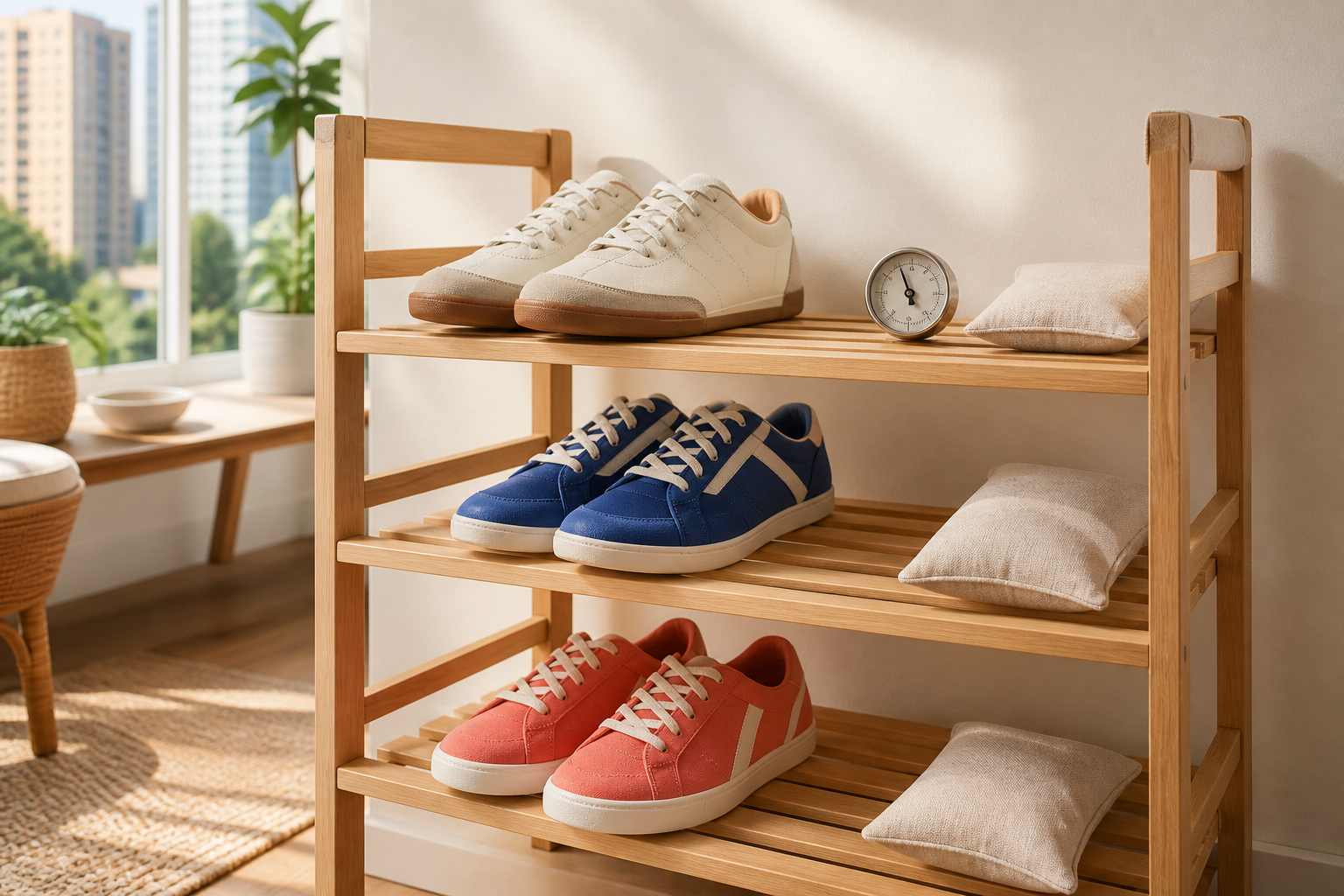
Understand the moisture load
PAGASA reports high relative humidity across the Philippines, with monthly averages varying by season. A room that feels normal can still slow evaporation, especially inside shoes and closed cabinets.(PAGASA climate of the Philippines)
A small monitor can reveal patterns, but a number is not a substitute for inspecting the actual items. Exterior walls, closed corners and recently worn footwear can create local conditions unlike the centre of the room.
Start only when fully dry
Remove loose dirt and let the shoe dry throughout after wear. Open laces or straps and check the lining, toe and under removable inserts. Putting a damp pair into an attractive box simply hides the remaining moisture.
Avoid strongly printed paper as stuffing because colour can transfer. Use clean, neutral support lightly enough to preserve shape without stretching seams or the upper.
Provide space and breathable protection
Canadian conservation guidance explains that high humidity, poor circulation, light and dust can damage textiles. Everyday footwear is not a museum object, but the preventive principles support airflow, clean storage and protection from prolonged light.(Canadian Conservation Institute textile guidance)
Leave gaps between pairs and avoid compressing uppers. A breathable dust cover may reduce abrasion; sealed plastic is a poor choice when dryness cannot be guaranteed.
Separate risky contact points
Keep dark or strongly dyed items away from pale prints when transfer is possible. Position hardware, buckles and rough soles so they do not press into another upper. Store pairs together without letting dirty outsoles touch artwork.
Do not stack heavy boxes on flexible shoes. If vertical space is limited, use shelves that support the sole rather than hanging footwear by collars or laces.
Build an inspection rhythm
Rotate through the shelf every few weeks during humid periods. Look for musty odour, spots, tackiness, colour transfer, corrosion and sole separation. Early observation allows isolation and appropriate advice before the issue spreads.
If mould is suspected, isolate the item and avoid brushing spores through the living space. Extensive growth, valuable items or health concerns warrant specialist handling.