By Zapin MNL Style DeskPublished 6–8 minute read
Rain care begins before a drop reaches the shoe. The safest plan combines weather awareness, an alternate pair, gentle drying and instructions verified for the exact materials.
Do not turn a fashion print into a performance claim. Avoid exposure when product limits are unknown, remove surface moisture gently and dry with airflow rather than heat.
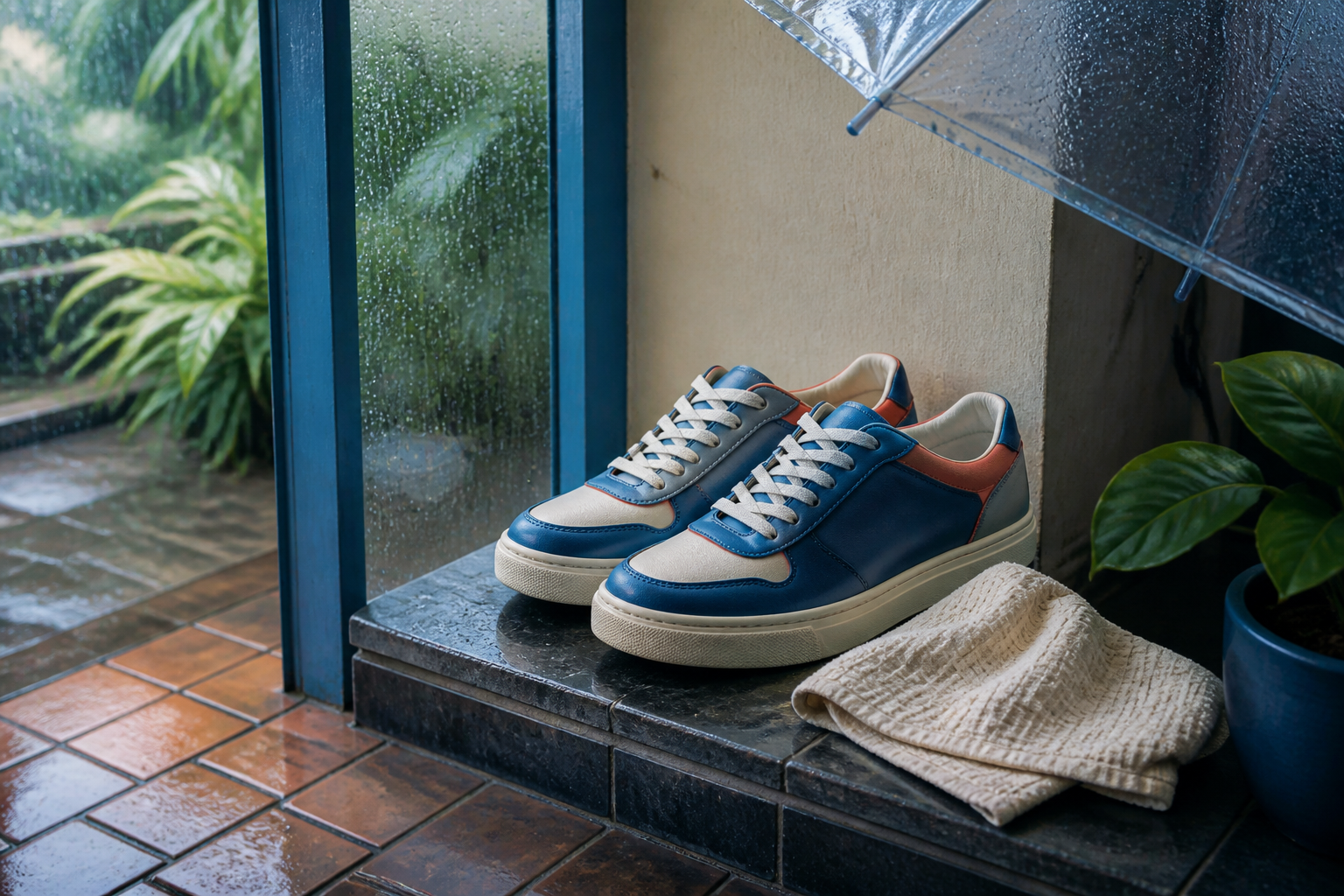
Plan for the actual climate
PAGASA describes the Philippines as tropical and maritime, with high relative humidity and a rainy season generally running from June to November. That context makes drying time and storage airflow part of ordinary footwear planning.(PAGASA climate of the Philippines)
Check the current forecast and route rather than relying on the season alone. Covered transport, flood risk and how long you will remain outdoors matter more than a general label such as “rainy day.”
Do not infer water resistance
A coated-looking print, thick sole or synthetic material does not prove the complete shoe resists water. Seams, eyelets, adhesive joins and lining can behave differently. Use only a verified product statement for performance claims.
If limits are unclear, choose an alternate pair for heavy rain. Prevention is more reliable than experimenting with a spray or treatment that may affect colour and finish.
Respond without scrubbing
Remove loose debris after it dries enough to lift safely. Blot surface moisture with a clean absorbent cloth and avoid rubbing grit across the print. Do not twist the shoe or strike the upper to force water out.
Take out removable components only when instructions permit. Open the fastening so air can move, and use clean, neutral support that does not stretch the shape or transfer ink.
Choose airflow over heat
Dry away from direct sun, hair dryers, radiators and tumble dryers unless the exact care instructions explicitly allow them. Heat can affect adhesives, coatings, colour and shape, while a dry-looking exterior can hide moisture inside.
Replace damp support material and wait until the lining and seams are dry before storage or wear. Sealing a damp item in a box or bag exchanges visible clutter for a harder moisture problem.
Review before the next wear
Inspect print edges, sole joins, odour and any change in texture. If a surface becomes tacky, colour transfers or components separate, stop home treatment and seek product-specific or professional guidance.
Record what happened and what was applied. A short note prevents repeated treatment and helps distinguish a one-off wet commute from a storage or construction issue.