By Zapin MNL Style DeskPublished 6–8 minute read
Organization is part of care. Loose hardware, leaking containers and overloaded pockets can damage a printed bag from the inside even when the exterior never meets rain.
Separate sharp, wet and staining items; keep weight within verified limits; reset the bag after use; and support it in storage without forcing its shape.
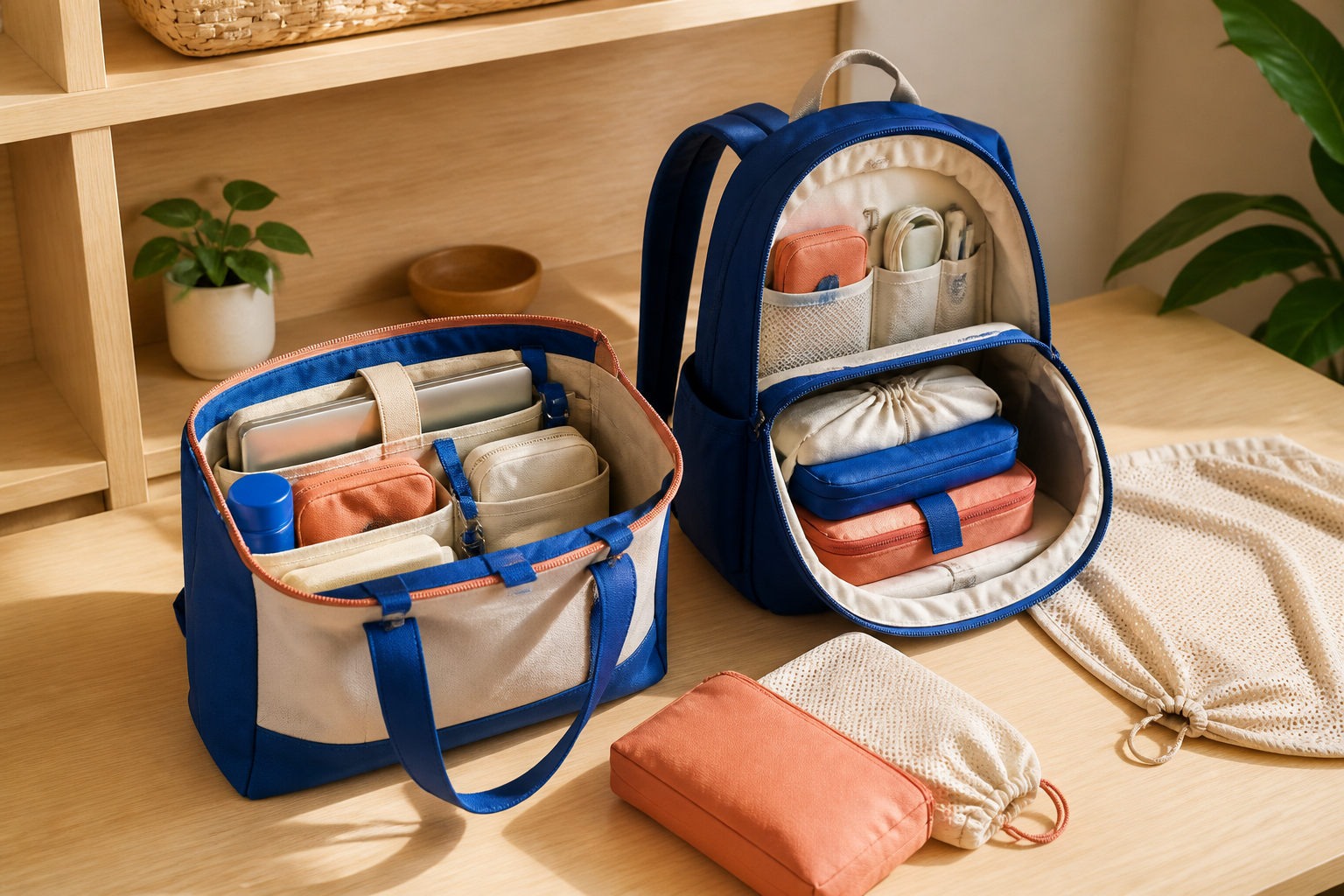
Create zones by risk
Group liquids in a sealed washable pouch, keep keys and sharp edges away from unlined printed panels and isolate cosmetics or pens that can leak. Frequently used objects belong where they can be reached without dragging everything across the opening.
A pouch is useful only if it does not encourage overpacking. Keep the heaviest objects low and close to the bag body when the construction supports them.
Protect the exterior during use
Avoid placing the bag on wet floors, rough walls or food surfaces. Shorten or secure long straps so hardware does not strike the artwork. When carrying dark garments, check for colour transfer at high-rub points.
Do not apply a protective spray without material-specific approval. A treatment can change colour, hand feel, breathability or the printed finish.
Run a two-minute reset
Empty crumbs and rubbish, remove damp items, inspect for leaks and let the interior air. Wipe only according to verified care instructions. Early attention to a small spill reduces the pressure to use aggressive cleaning later.
Look at handles, strap anchors, zip ends and base corners. Those load points often reveal a problem before the central printed panel does.
Store with gentle support
Canadian textile guidance highlights damage from high humidity, light, dust, creasing and poor support. For an everyday bag, those principles translate into dry, ventilated storage with as few hard folds as possible.(Canadian Conservation Institute textile guidance)
Use clean neutral tissue or a soft insert to hold shape lightly. Do not hang a heavy bag by its straps for long periods or place hardware against the print.
Keep a material and care record
Save the exact label, product description and instructions with a photo of the bag. If it combines coated fabric, textile, metal and lining, note which advice applies to which surface.
Record any cleaner or repair. This prevents incompatible repeat treatments and gives a specialist better information if colour transfer, mould or structural damage appears.