By Zapin MNL Style DeskPublished 6–8 minute read
Repair is not automatically the sustainable answer, and replacement is not automatically wasteful. The decision depends on the failed component, the remaining structure and whether a qualified repair is feasible.
Stop wearing a pair when structure or safety is uncertain. Identify the failure, seek an honest repair assessment and compare expected use rather than sentimental or cosmetic value alone.
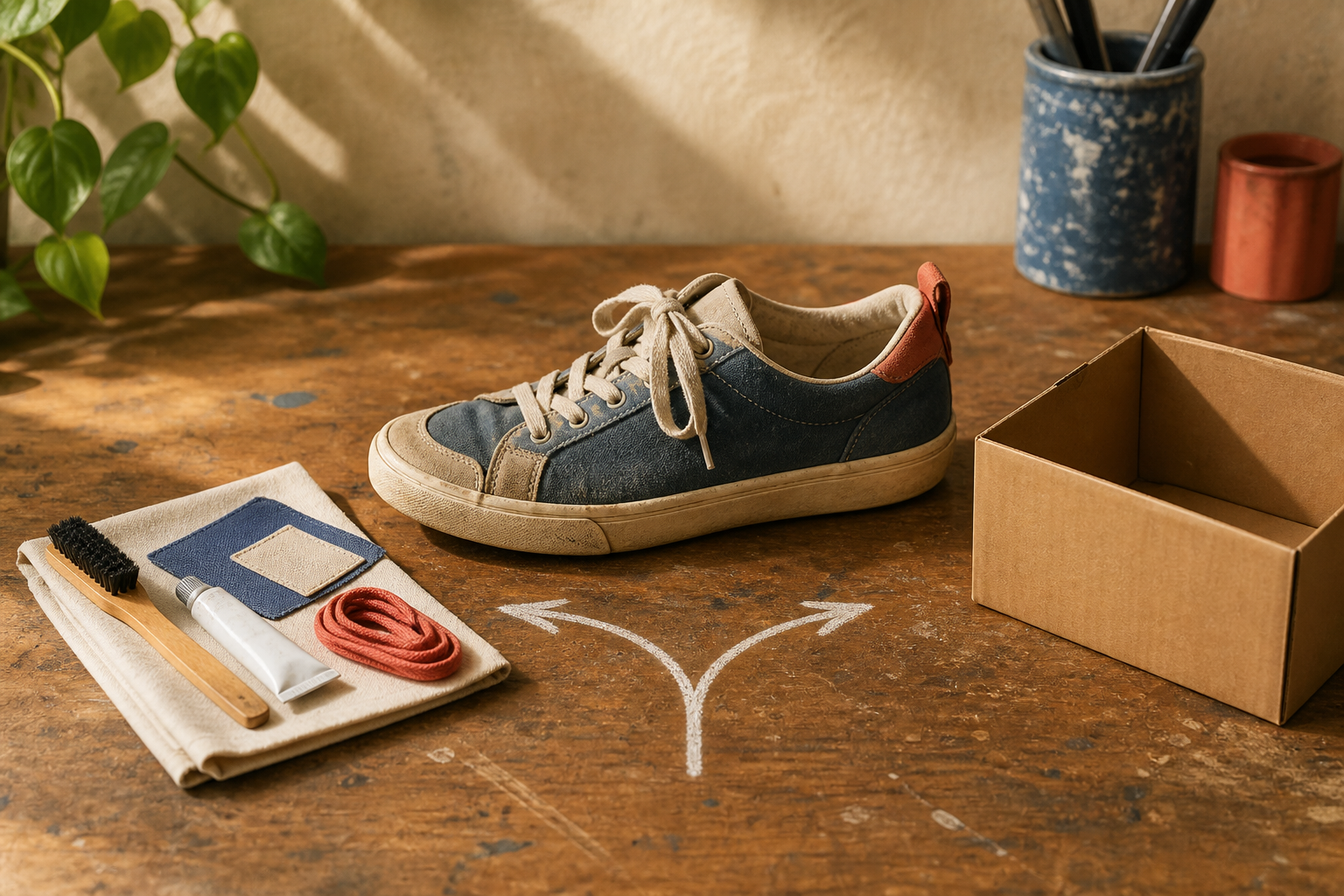
Classify what has changed
Separate dirt and surface scuffing from worn tread, split uppers, failed fastenings, compressed internal components and sole separation. The same visual severity can have very different consequences.
Compare both shoes and review when the change appeared. Sudden asymmetry or damage after unusual exposure deserves more caution than even cosmetic ageing.
Stop before making repair harder
Improvised glue, paint or aggressive cleaning can contaminate surfaces and limit professional options. Keep loose parts, photograph the area and record any product already applied.
Do not continue wearing a shoe that feels unstable, exposes sharp components or changes your gait. An editorial guide cannot certify that a damaged structure remains safe.
Ask a repairer specific questions
Describe the upper, sole, print and failed area. Ask what will be removed, replaced or covered, how the artwork will be protected and whether the repair changes fit or flexibility.
Request limits as well as possibilities. A visible repair may be acceptable; an invisible promise without evidence is less useful than a clear functional outcome.
Compare remaining value
EU Ecolabel footwear criteria include durability as a defined performance area. For an individual pair without such test evidence, use observed construction, repairability and expected future wear rather than broad sustainability claims.(European Commission EU Ecolabel footwear criteria)
Estimate how often the repaired pair will genuinely be worn and whether the original fit remains good. Repeating a failed repair on an unsuitable shoe does not extend useful life.
Retire responsibly when needed
Check local repair, reuse and waste routes rather than assuming every mixed-material shoe can enter kerbside recycling. Remove personal labels and keep pairs together when donating usable footwear.
Record the failure before buying a replacement. The lesson may concern exposure, storage, fit, rotation or a construction detail worth checking next time.