By Zapin MNL Style DeskPublished 6–8 minute read
The first inspection should be systematic, not suspicious. It confirms that the delivered pair matches the listing and gives you a useful record before wear changes the surfaces.
Verify the order, photograph both shoes, compare print and construction, try them indoors and contact the seller promptly when the pair differs materially from the description.
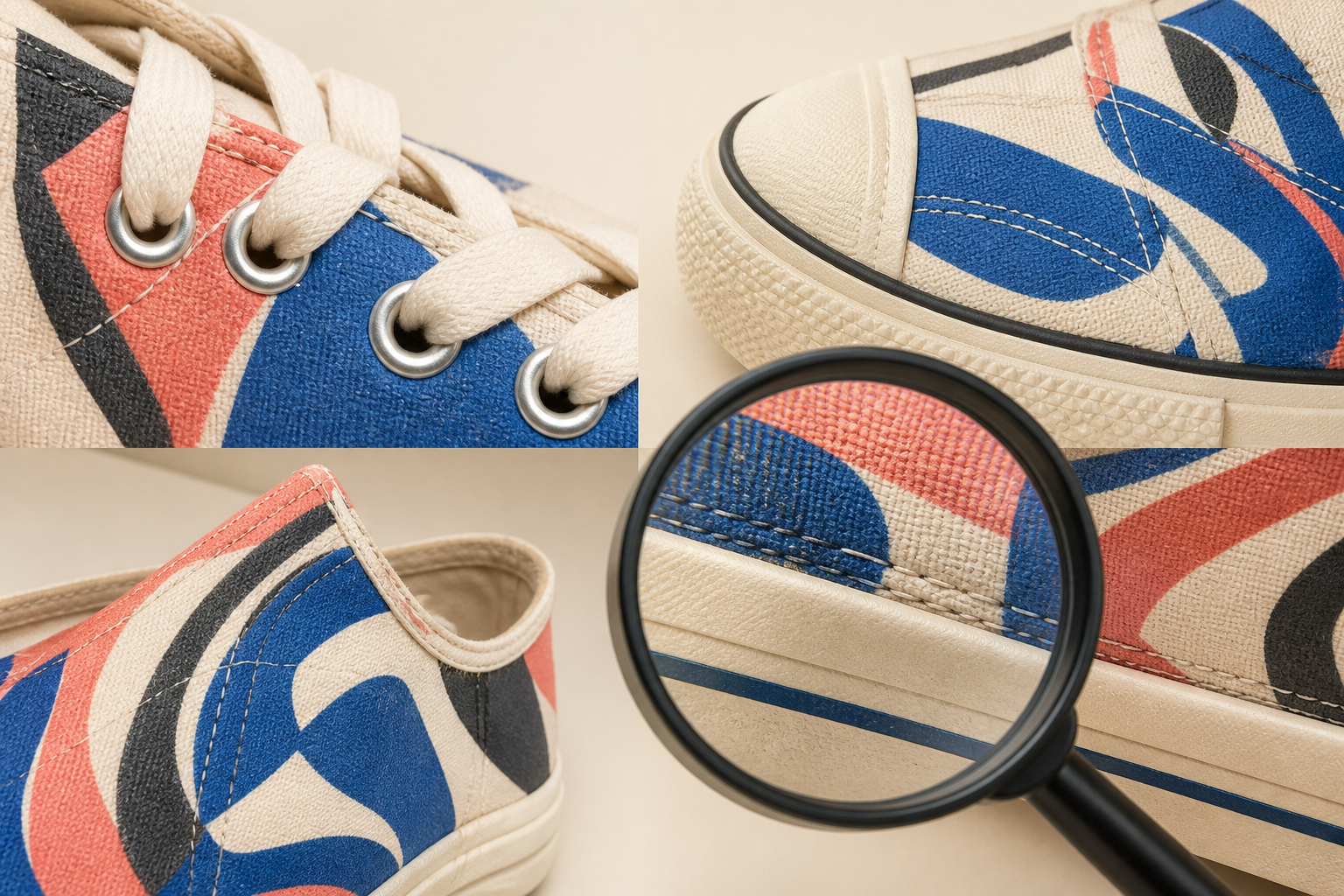
Compare the pair, not perfect symmetry
Look at motif placement, colour, panel shape, stitching, eyelets and sole alignment across both shoes. Printed items can have expected placement variation, but that does not excuse a mismatch with the seller description.
Decide whether a difference is a design variation, cosmetic flaw or structural concern. Ask rather than inventing a manufacturing explanation.
Read material information carefully
Official EU guidance separates footwear material information into the upper, lining and insole, and outer sole. Even outside that market, the distinction is a useful checklist for asking what each component is made from.(European Commission footwear labelling guide)
Do not translate a broad material name into unsupported performance. “Textile” does not prove washability, and “other materials” does not prove water resistance.
Try on indoors and inspect again
Use the intended socks, fasten correctly and walk on a clean surface. Check both feet for toe space, width, depth and heel security. Then remove the shoes and see whether the upper creased or components shifted unexpectedly.
Do not use prolonged pain as a break-in test. Keep the try-on reversible while fit is unresolved.
Use the seller process promptly
Philippine DTI guidance tells online shoppers to check return and refund policies and provides routes for consumer concerns. Start with the seller policy and preserve the evidence relevant to the exact issue.(Philippine DTI e-commerce consumer guidance)
Describe observations neutrally, attach clear images and state the requested remedy. Avoid cleaning or repair before the seller responds unless urgent safety requires isolation.