By Zapin MNL Style DeskPublished 6–8 minute read
A shoe can feel long yet cramped, or wide at the heel yet narrow at the toes. Breaking fit into zones makes the problem easier to describe and the return decision easier to defend.
Check toe room, width, depth and heel hold separately. A size number cannot tell you which zone is mismatched.
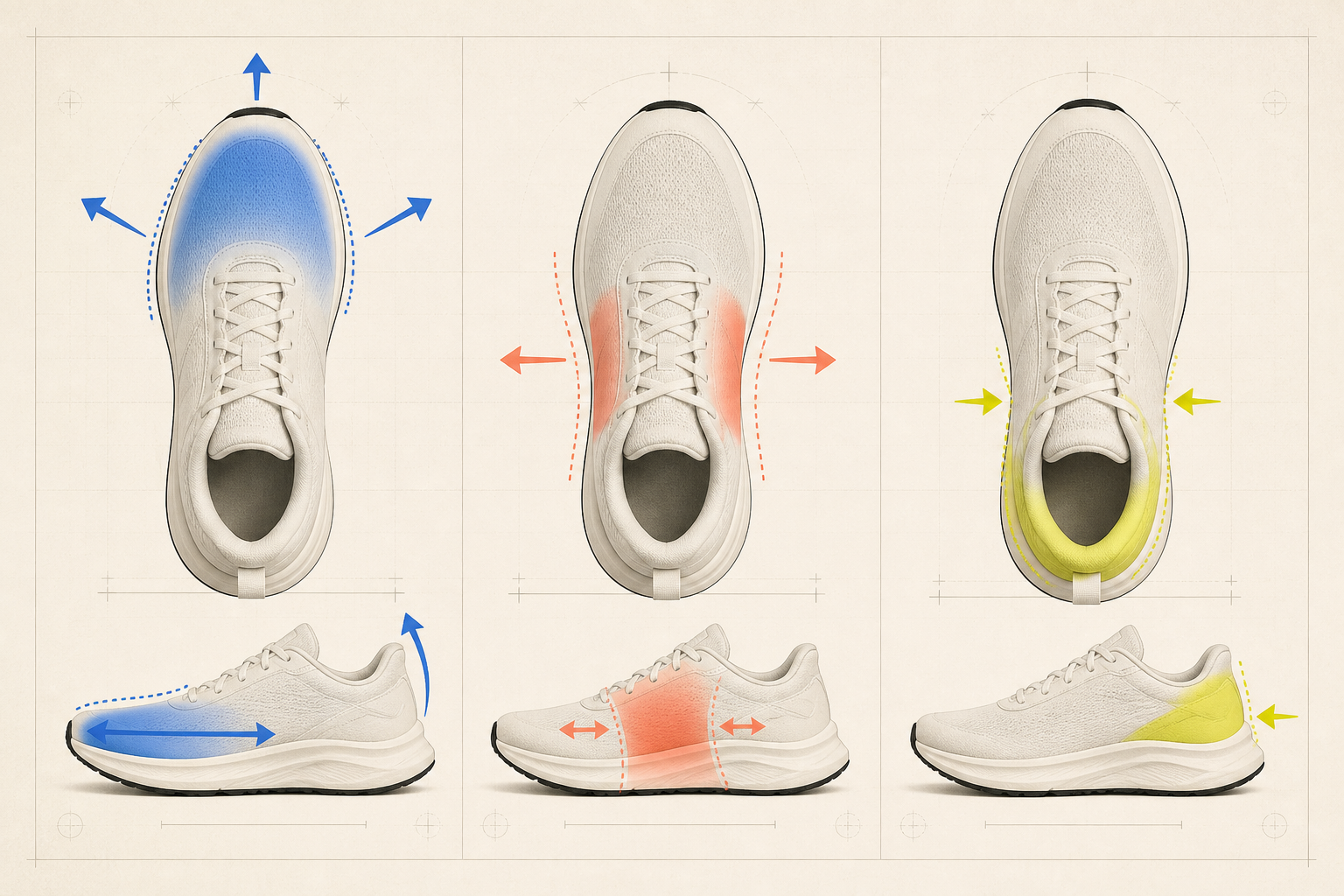
Length protects the front margin
An NHS footwear leaflet advises space beyond the longest toe and a shoe that fits properly from new. Use its clinical guidance as a general checkpoint, then follow advice specific to your own needs.(East London NHS footwear leaflet)
Check the margin while standing and after fastening. If the foot slides forward, apparent extra length may not solve the real problem.
Width is a shape relationship
The widest part of the foot should sit where the shoe is designed to flex. Bulging, compressed toes or an upper pulled sharply across the forefoot suggest a shape mismatch even when length looks generous.
Do not rely on the idea that every upper will stretch. Material category alone does not state how a lining, print layer, seam or reinforcement will behave.
Depth affects pressure from above
Toe-box depth, tongue padding and the placement of laces affect the space above the foot. A removable insert may change available volume, but removing or replacing it can change support and should follow appropriate guidance.
Photographs rarely show internal depth clearly. If this is a recurring fit issue, ask for measurements or try the style through a returnable channel.
Heel hold is not heel squeezing
A secure heel helps stop the foot sliding forward. Tightening the top eyelets cannot rescue every mismatch and may create pressure elsewhere. Check whether the heel contour and closure work together before changing lacing aggressively.
A small movement and damaging slip are not the same, but an online article cannot diagnose the difference for an individual. Persistent pain, skin damage or unusual gait deserves qualified assessment.
Describe the mismatch precisely
When requesting help, replace “wrong size” with observations: longest toe touches, forefoot compressed, heel lifts, collar rubs or laces reach their limit. Precise language gives a seller or fitter more information.
Photograph the lacing and upper shape without sharing sensitive personal details. Keep the pair clean and follow the return policy while the decision is unresolved.