By Zapin MNL Style DeskPublished 6–8 minute read
Travel packing adds pressure, dirty soles, changing humidity and long periods without airflow. A simple separation plan protects both the shoes and everything around them.
Pack only clean, dry shoes. Support their shape lightly, isolate soles in breathable washable covers and place them where luggage pressure is controlled.
Choose the pair by itinerary
Match the shoe to walking load, weather, dress needs and verified construction. A statement pair can be the main travel shoe when it fits the route; otherwise it may be a planned evening or indoor option.
Wear the bulkiest suitable pair only if it is already comfortable. Travel is a poor time to test a new fit, new treatment or optimistic break-in plan.
Clean and dry before packing
Brush away loose dirt and make sure lining, seams and inserts are dry. Packing residual dampness beside clothing creates odour and transfer risk, especially when the bag remains closed for hours.
Photograph the pair before departure if it is distinctive. The image helps with packing orientation and provides a record if damage is discovered later.
Support without overfilling
Use clean socks, neutral tissue or a soft pouch inside the toe only as light shape support. Do not force the upper outward or create a hard edge against the print.
Fasten laces loosely so they do not snag. Wrap metal details separately and keep soles from rubbing directly against an illustrated panel.
Control pressure and transfer
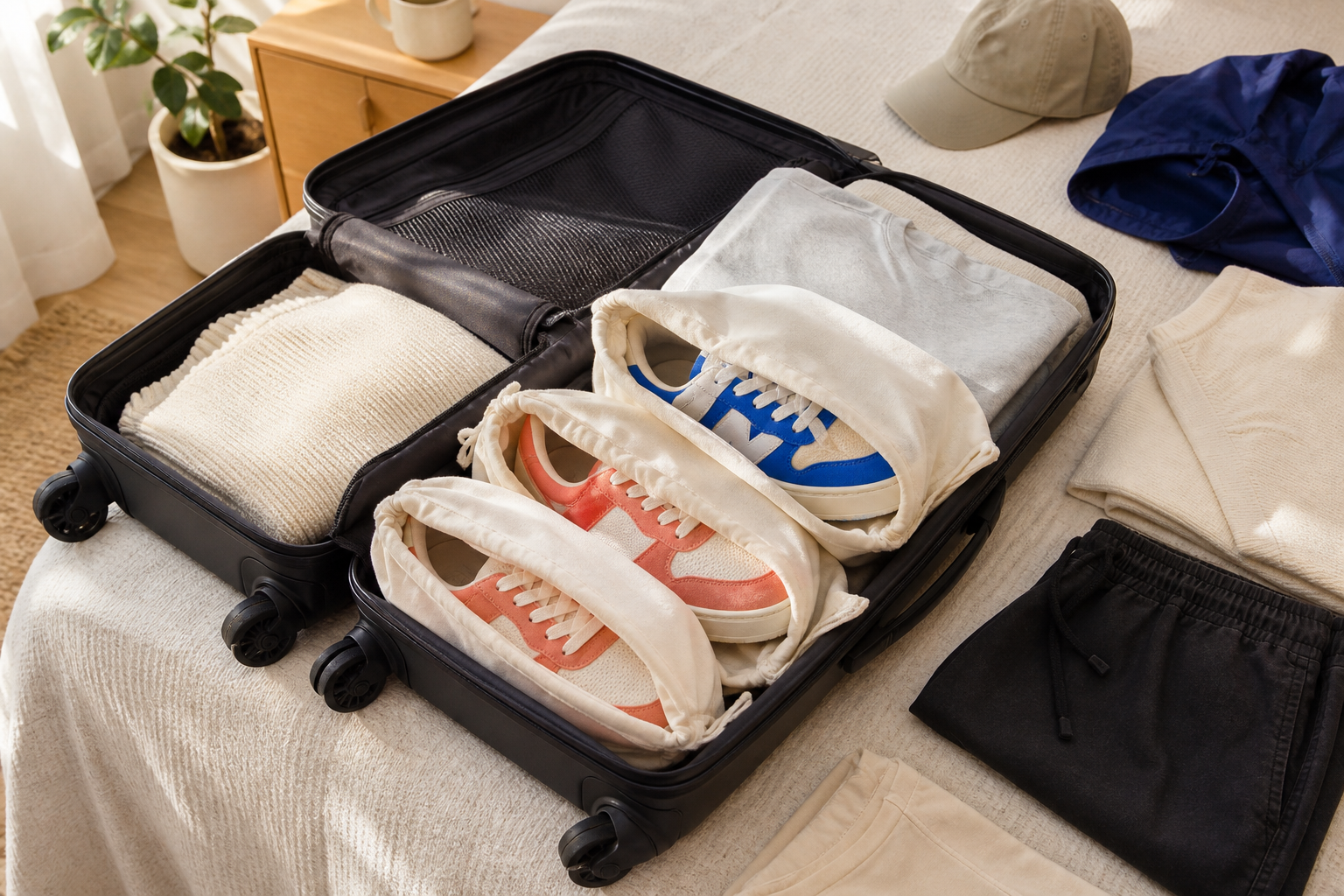
Place each shoe in a washable breathable cover, with dirty surfaces separated from clothes. Position soles near the structured edge or wheel side of luggage while keeping crushable collars away from hard objects.
Do not trap a damp shoe in sealed plastic. If a waterproof barrier is necessary for the luggage, remove it and air the pair promptly on arrival.
Unpack as a first task
Take the shoes out, remove supports and allow air to circulate. Inspect for compression, moisture or transfer before wearing. A short reset is more effective than leaving the case half-open for several days.
For the return trip, repeat the dry check. Shoes worn in rain or high humidity may need more time than the travel schedule allows, so carry an alternate plan rather than packing them wet.