By Zapin MNL Style DeskPublished 6–8 minute read
Denim is often called a neutral, but indigo depth, fading, stitching and hem volume all affect a printed shoe. The best pairing begins by treating those details as active design choices.
Choose one denim feature to echo the shoe and let the other elements recede. Indigo depth, hem shape or stitching can connect the look without copying every colour.
Use wash to set the contrast
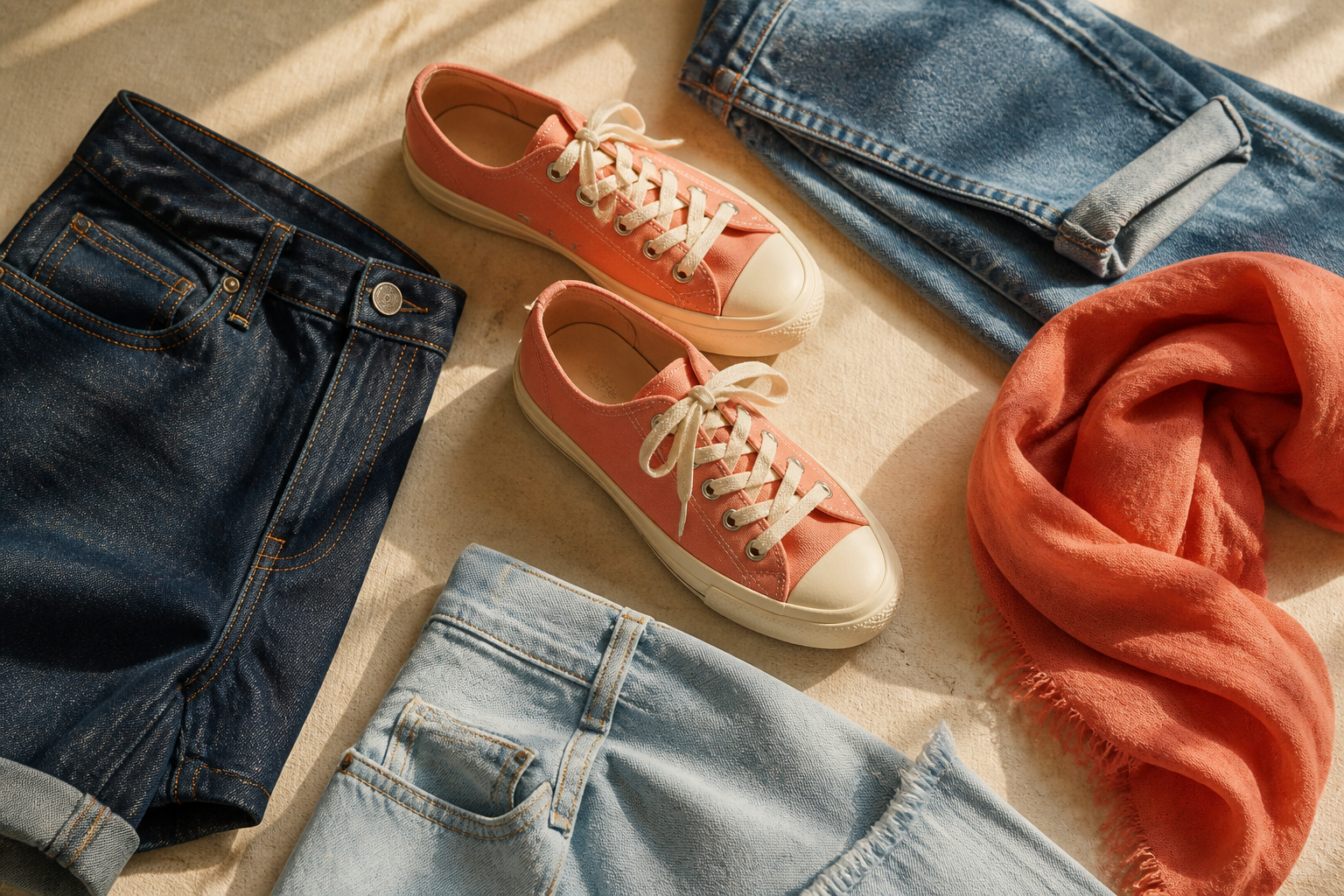
Dark indigo creates a strong frame and makes pale or bright prints look sharper. Mid-wash denim softens the transition, while heavily faded denim adds its own pattern. Put the shoe beside the fabric in daylight before deciding whether the two surfaces support or compete.
If both are busy, reduce another source of noise. A plain top and simple bag can preserve the interest at the lower half without forcing the entire outfit into the same visual register.
Make the hem intentional
A straight hem that ends above the shoe reveals the complete side panel. A longer relaxed hem covers more artwork and turns the toe into the focal area. Rolling introduces a horizontal band and a lighter denim reverse, which may help or interrupt the print.
Test the hem while walking and sitting. A static mirror view can hide bunching or cover a motif that appears visible when standing still. The useful length is the one that behaves well through the day.
Repeat one small colour
Pick a secondary colour from the doodle rather than its loudest tone. Repeat it once in a sock, small bag, shirt detail or jewellery-like accessory. This creates a path for the eye while letting the sneaker remain the main graphic object.
If the denim already has coloured stitching, count that as a repetition. Adding more matching pieces can make the connection feel overly managed.
Balance denim weight and shoe shape
Rigid, wide denim creates a substantial block and can support a high-top or stronger sole. Lightweight or narrow denim exposes more of the shoe and can make a detailed low-top feel especially crisp. These are proportion tools, not gender rules.
Try the combination from the side as well as the front. The side view reveals whether the hem and collar collide, whether the sole feels too small under the trouser volume and whether the print remains readable.
Create three repeatable formulas
Build a dark-denim formula, a light-denim formula and one layered formula for cooler or rainier conditions. Photograph each with notes about sock height and hem treatment. A small outfit record reduces the temptation to solve the same question from zero.
Rotate one variable at a time. Change the top colour before changing the denim shape; change the hem before adding another print. Clear iteration produces more useful outfits than adding several “interesting” pieces at once.