By Zapin MNL Style DeskPublished 6–8 minute read
The useful question is not whether an illustrated shoe looks exciting on its own. It is whether its colours, proportions and level of detail can join the clothes you actually repeat.
Start with three real outfits, name the role the shoe will play in each, then choose the print that creates the clearest relationship rather than the loudest first impression.
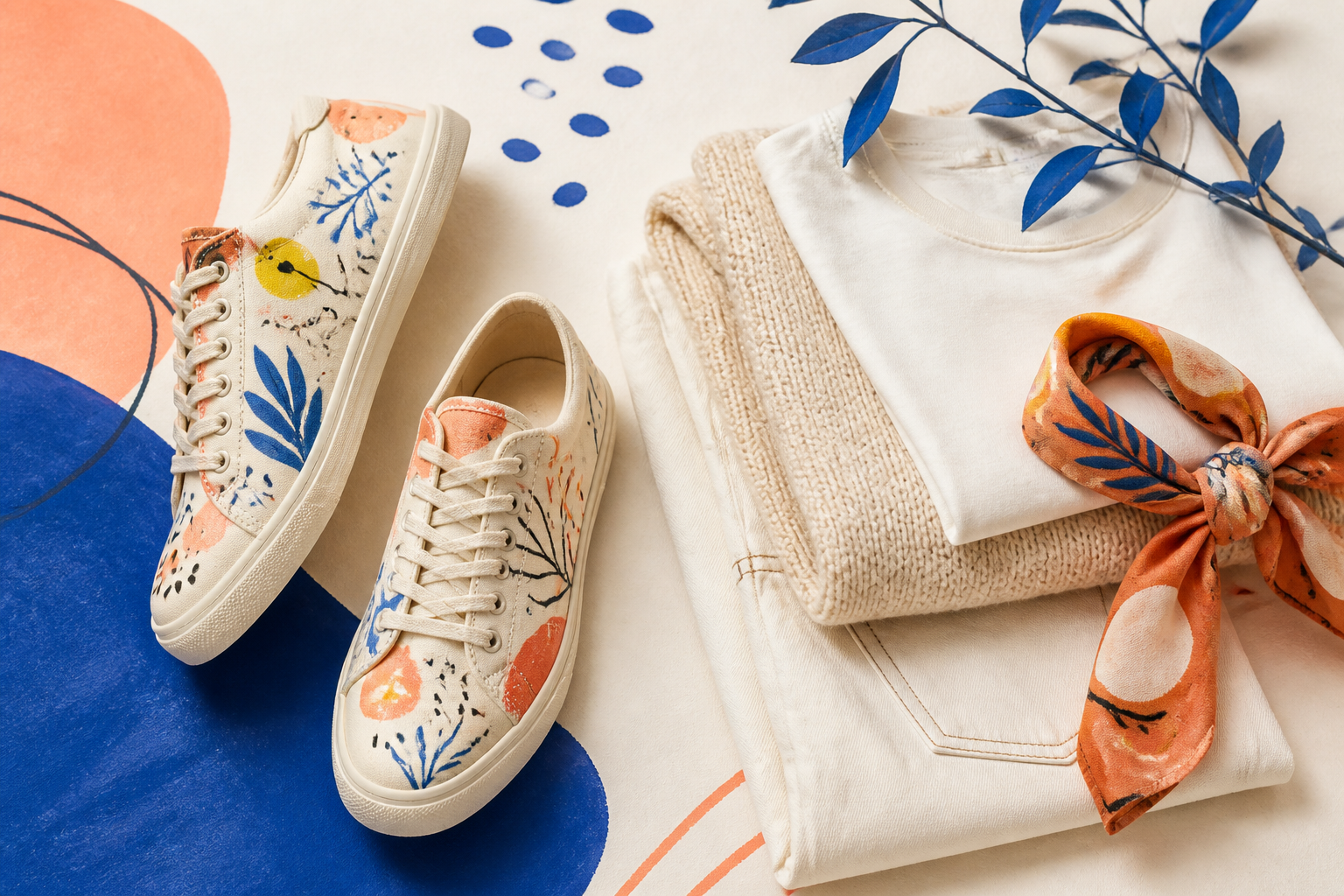
Begin with the week, not the product grid
List the settings that account for most of your wear: commute, desk, errands, meals out or relaxed weekends. Put together one realistic outfit for each. This exposes practical limits such as hem length, dress code and how much colour is already present.
A shoe that works with only one imagined look may still be worthwhile, but it is an occasion piece rather than an everyday anchor. Naming that difference prevents a versatile purchase brief from turning into a novelty decision.
Read the print from two distances
Fashion objects communicate through material, form and context. First view the print as a whole block of colour, then inspect its smaller marks. A dense motif may read like texture across a room while an open doodle keeps individual characters visible.(V&A fashion collection)
Ask which reading you want to lead. For a quiet wardrobe, a dense two-colour field can act almost like a solid. If the drawing itself matters, give it calmer clothing and enough exposed shoe area to be seen.
Choose a colour job
Identify the print ground, its dominant mark and one small accent. The ground usually connects most easily to trousers or a skirt; the dominant mark can repeat a top or bag; the accent can remain independent and give the outfit energy.
Matching every colour is unnecessary. One repeated tone and one compatible neutral are usually enough to make the choice feel deliberate. Exact head-to-toe matching can flatten the print by removing the contrast that made it interesting.
Let silhouette solve a practical need
A low top keeps the ankle visually open and tends to disappear more easily beneath longer hems. A high top adds a stronger block around the ankle and benefits from deliberate trouser length. Slip-ons simplify the upper but offer a different fastening experience.
Treat those observations as styling distinctions, not fit promises. The exact last, width, closure and construction still decide whether a pair suits your foot and use. Confirm those details before letting artwork settle the choice.
Run the three-outfit test
Photograph each planned outfit with a similarly coloured object placed where the shoe would appear. Look for a readable hierarchy: one lead, one support and enough quiet space. If the lower half becomes disconnected, repeat a small colour higher in the outfit.
Finish by checking care, material information and the seller return process. Everyday value depends on being able to wear, maintain and reassess the pair, not simply on how persuasive one product image looks.